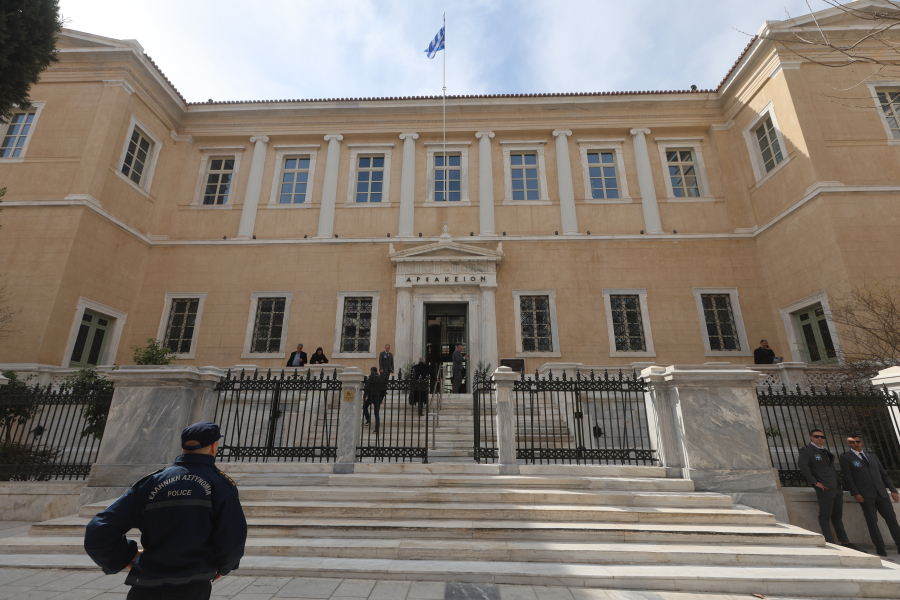
Less than two years later, the project is confronting an embarrassing problem: The law survived constitutional scrutiny, but the government’s implementation of it hasn’t.
A series of rulings by Greece’s Council of State, the country’s highest administrative court, has exposed serious shortcomings in the licensing and
accreditation of three of the first four nonstate universities that began operating in the 2025-26 academic year. Their operating licenses and program accreditations were annulled, leaving the first year of studies of roughly 600 students in uncertainty.
The government is now racing against the clock to repair a system it had presented as ready for operation.
ΔΙΑΒΑΣΤΕ ΕΠΙΣΗΣ



The most consequential finding concerns the Hellenic Authority for Higher Education, or HAHE, the independent regulator responsible for accreditation. The court found that accreditation criteria for nonstate university programs hadn’t been sufficiently specified in quantitative and qualitative terms. Other rulings identified procedural problems involving building certifications and a conflict involving a member of an evaluation committee.
The Education Ministry considers some of these problems relatively easy to correct. But the accreditation issue cuts deeper. HAHE must now revise its 11 accreditation criteria and reassess affected programs, while seven additional nonstate universities licensed for the 2026-27 academic year could also face delays.
The government has an obvious incentive to place responsibility on the independent regulator. Relations between Education Ministry officials and HAHE President Pericles Mitkas were already strained, with the ministry previously blaming the authority for delays and HAHE complaining about inadequate staff and resources.
Yet independence doesn’t absolve the government of political responsibility. Prime Minister Kyriakos Mitsotakis’s administration made nonstate universities a signature reform and moved ahead despite fierce political and legal controversy. A project of such importance required a regulatory framework capable of surviving predictable judicial challenges from day one.
Instead, students and their families are now bearing the uncertainty created by administrative weaknesses they had no role in creating.
There is an additional irony. The Council of State has reaffirmed the constitutionality of the 2024 legislation that opened the door to foreign university branches. The threat to the reform therefore comes less from the constitutional objections raised by its opponents than from shortcomings in its execution.
That distinction matters. Greece’s effort to attract respected foreign universities and introduce greater competition into higher education could still prove consequential. But institutional reform requires more than passing politically difficult legislation. It requires regulators with sufficient resources, carefully drafted rules and an administration prepared for legal scrutiny.
The government won the argument over whether nonstate universities can exist in Greece. It now faces a less flattering question: whether it was adequately prepared to make them work.