Former Greek Prime Minister Costas Karamanlis delivered one of his sharpest public criticisms of Greece’s political climate in years on Thursday, warning that surveillance practices under the administration of Prime Minister Kyriakos Mitsotakis and mounting public distrust in the judiciary threaten the country’s democratic institutions.
The intervention by Karamanlis, who governed Greece from 2004 to 2009 and remains a prominent figure within the ruling center-right camp, comes as Mitsotakis’ government continues to face lingering political fallout from a wiretapping scandal that drew scrutiny from European institutions and international watchdogs over surveillance oversight and media freedom.
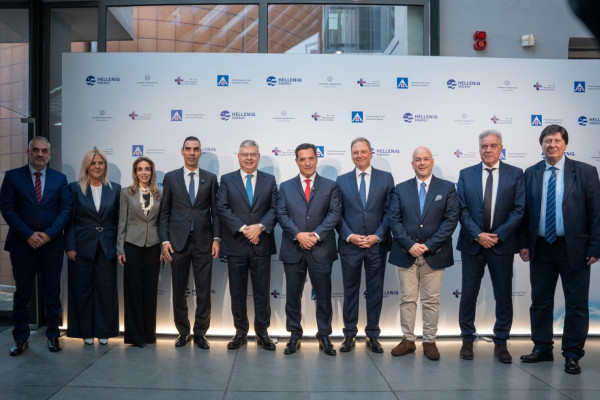
Speaking at the Athens Concert Hall during the presentation of The New World Order: The Law of Power, a book by former ministers Constantinos Arvanitopoulos and Sotiris Filis, Karamanlis moved beyond the book’s geopolitical themes to address domestic governance, institutional credibility and the state of democracy in Greece.
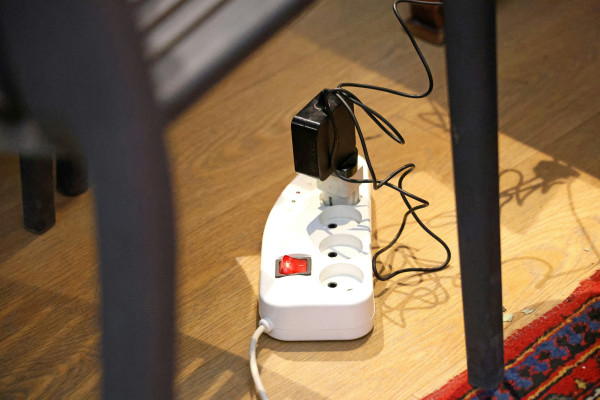
“The role of the media and the issue of accurate and impartial information are of decisive importance,” Karamanlis said. “When information serves entrenched interests or becomes an overt attempt at manipulation, democracy is damaged. Illegal surveillance — or surveillance that appears formally legal — also damages democracy.”
He reserved his strongest criticism for what he described as the growing public perception that institutions are no longer operating independently.
“The greatest blow,” he said, “is the widening conviction among the majority of citizens that institutions — above all justice itself, as the foundation of a free and democratic society — are being manipulated.”
The remarks carry particular political weight given Karamanlis’ position within Greece’s conservative establishment and his generally measured public profile. While he stopped short of directly naming the government over the surveillance controversy, his reference to “illegal or formally legal” monitoring was widely interpreted as an allusion to the wiretapping affair that engulfed the Mitsotakis administration after revelations that politicians, journalists and public officials had been placed under surveillance.
Karamanlis framed those domestic concerns within a broader argument that the post-Cold War international order is breaking down, giving way to a more fragmented world increasingly driven by power politics rather than rules-based norms.
He criticized what he called the European Union’s inability to exercise geopolitical influence commensurate with its economic weight and argued that transatlantic cohesion is weakening.
“The traditional cohesion of the West is under collapse,” he said, adding that differences between Europe and the United States, once manageable, now appear increasingly difficult to bridge.
A significant part of his address focused on Turkey and regional security in the Eastern Mediterranean. Karamanlis warned that Ankara is methodically pursuing a revisionist strategy and pointed specifically to the “Blue
Homeland” doctrine, Turkey’s expansive maritime vision covering large parts of the Aegean and Eastern Mediterranean.
He described the doctrine as “unthinkable” and argued that efforts to formalize it within Turkish state structures demonstrate the long-term nature of Ankara’s ambitions.
“With these developments,” he said, “we should reflect on the effectiveness of the policy of ‘calm waters.’”
he comment appeared aimed at Greece’s recent effort to reduce tensions with Turkey after years of confrontation over maritime claims, energy resources and military activity in the region.
Karamanlis concluded by urging Greece to intensify diplomatic efforts to explain its security concerns to allies and partners, arguing that Europe has failed to apply consistent standards in addressing security challenges affecting Greece and Cyprus.
“No one in Greece,” he said, “is available for concessions on internationally established rights and sovereign entitlements.”