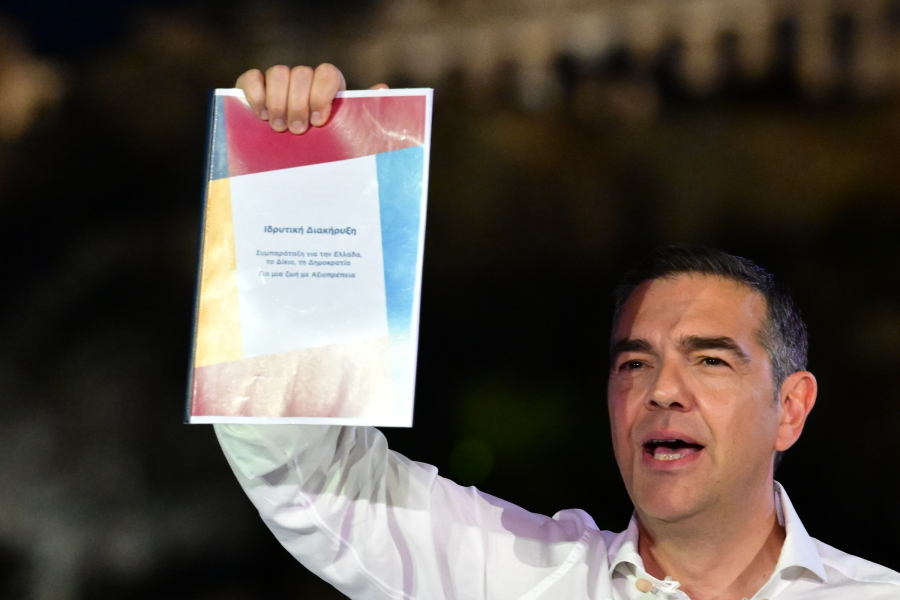
Former Greek Prime Minister Alexis Tsipras returned to frontline politics on Tuesday, launching a new political party aimed at reshaping Greece’s fragmented center-left and capitalizing on mounting public frustration over living costs, housing pressures and institutional distrust.
Speaking before thousands of supporters gathered in Athens’ historic Thissio district, Tsipras announced the creation of the Hellenic Left Alliance (Elliniki Aristeri Symparataxi), declaring that “the waiting is over” and presenting the movement as a vehicle not simply for a change in government, but for “a change of policy.”
The launch marks Tsipras’ most significant political move since stepping back following electoral defeats suffered by his former party, SYRIZA, after years of dominance on Greece’s left. His re-emergence comes at a time when the country’s opposition landscape remains fragmented despite persistent criticism of the government led by Prime Minister Kyriakos Mitsotakis.
“We cannot continue to watch passively while society suffocates,” Tsipras told supporters. “Today we leave behind disappointment, inertia and abstention. A new political force is born.”
The former premier framed the new party as a broad progressive coalition rather than a traditional left-wing formation, seeking to attract disillusioned voters from across Greece’s center-left spectrum, including former supporters of SYRIZA and PASOK as well as politically unaffiliated voters.
Tsipras outlined a platform centered on social welfare, democratic reform and economic restructuring, pledging stronger protections for public healthcare and education, greater transparency in government, investment in domestic production, housing affordability measures and technological sovereignty.
He argued that Greece faces not only economic pressures but also a broader crisis of trust in institutions and public life.
The speech quickly turned confrontational as Tsipras launched a sharp attack on the governing administration, accusing it of concentrating power, favoring elite interests and allowing corruption and inequality to deepen.
He criticized the management of European recovery funds, claiming resources had disproportionately benefited powerful interests while households struggled with inflation and stagnant purchasing power.
Tsipras also cited a series of controversies that have dominated Greek politics in recent years, including surveillance scandals, concerns over rule of law and the deadly Tempi rail disaster that triggered widespread protests and renewed scrutiny of state institutions.
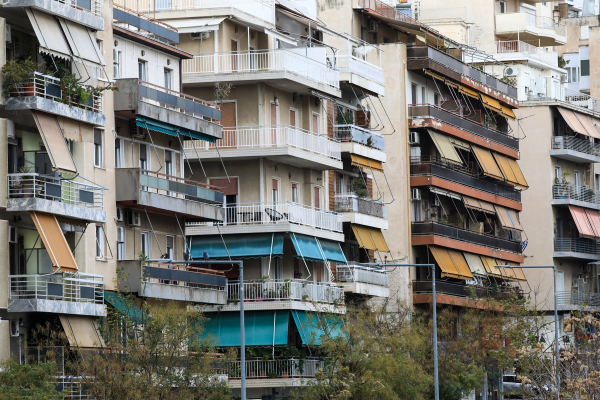
Housing emerged as a central theme in his address. Tsipras described home ownership as becoming “an unreachable dream” for younger Greeks, pointing to surging property prices and rents that have compounded demographic challenges in a country already facing population decline.
The former prime minister also broadened his criticism to Greece’s traditional political establishment, targeting both the ruling New Democracy party and PASOK – Movement for Change, arguing that the country’s old political order had failed to address structural problems.
His new party explicitly places itself within Greece’s progressive political lineage, invoking historical references ranging from the wartime resistance movement to PASOK’s reformist era and SYRIZA’s rise to power during the sovereign debt crisis.