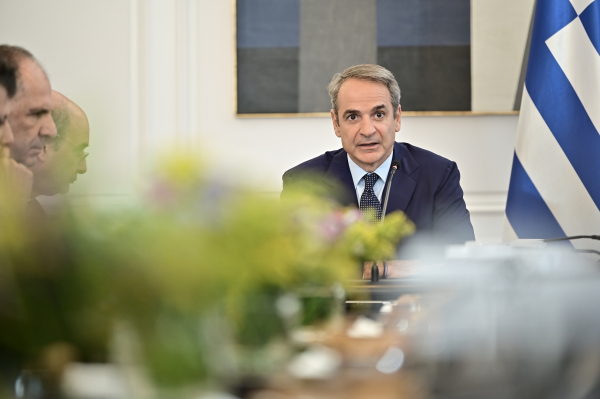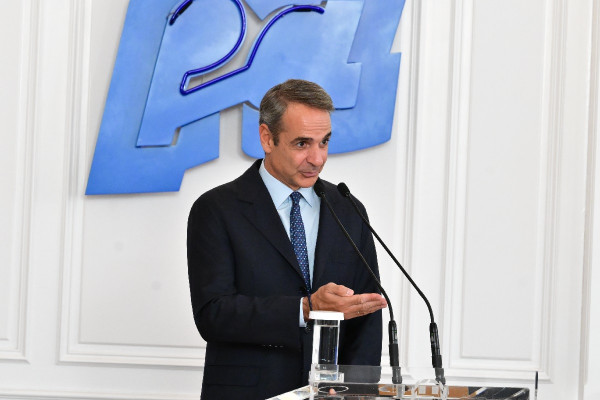
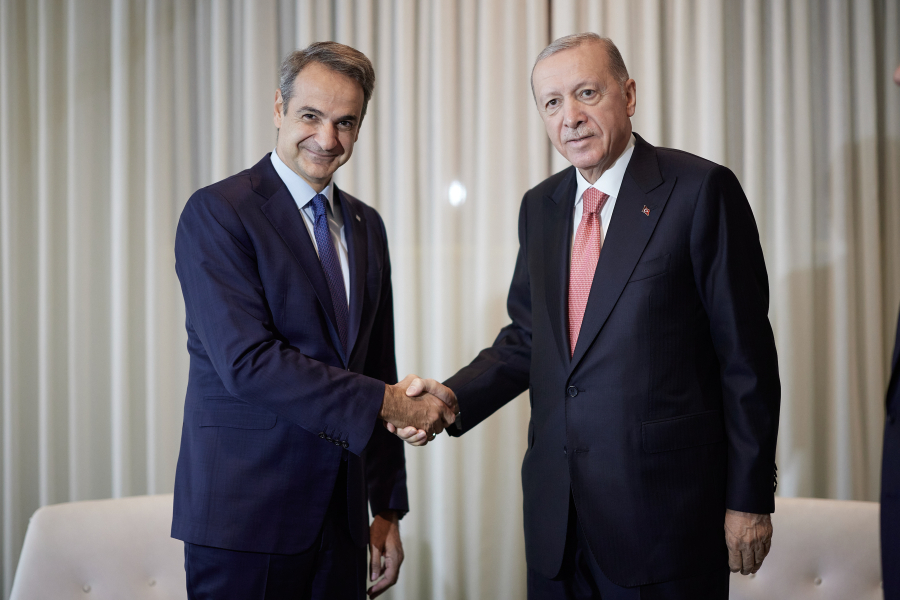

The Greek government approaches today’s high-level meeting with Turkey in Ankara with clearly defined positions and limited expectations. Athens insists that the only outstanding dispute between the two countries is the delimitation of the continental shelf and Exclusive Economic Zones in the Aegean Sea and the Eastern Mediterranean, while sovereignty issues are treated as a firm red line and explicitly excluded from any discussion. Against this backdrop, a ten-member ministerial delegation led by Prime Minister Kyriakos Mitsotakis travels from Athens to Ankara for the sixth meeting of the Greece–Turkey High-Level Cooperation Council.
According to the official schedule, the summit proceedings will begin in the afternoon with a meeting between Mitsotakis and Turkish President Recep Tayyip Erdoğan, attended by the two foreign ministers, George Gerapetritis and Hakan Fidan. During the talks, the Greek prime minister is expected to raise the long-standing issue of Turkey’s casus belli against Greece, while Erdoğan has already signaled that he intends to propose forms of mutually beneficial cooperation in the Aegean and the Eastern Mediterranean.
In addition to the two leaders and their foreign ministers, nine Greek cabinet members will participate in the council, reflecting the broad range of sectors covered by bilateral cooperation. Particular attention is expected to focus on the joint statements by the two leaders later in the day, as well as on the official dinner hosted by Erdoğan in honor of the Greek delegation. The Ecumenical Patriarch Bartholomew has also been invited to the dinner, a gesture that has fueled cautious expectations that there could be developments regarding the possible reopening of the Halki Theological School.
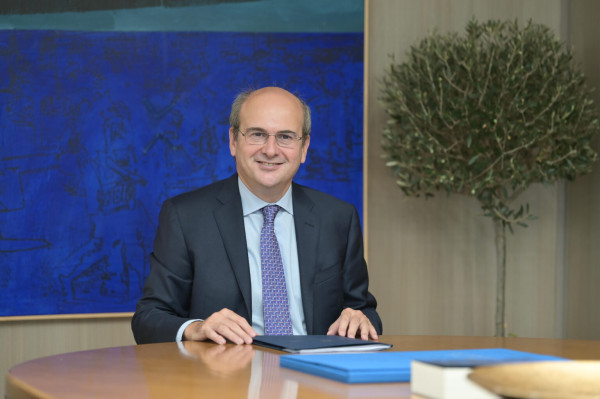
Economic cooperation features prominently on the agenda, as both Athens and Ankara have set a target of raising bilateral trade to €10 billion. In this context, the participation of Greece’s Minister of National Economy and Finance, Kyriakos Pierrakakis—who also serves as President of the Eurogroup—is considered particularly significant during the expanded interministerial session of the council. Other members of the Greek delegation include ministers responsible for development, education and religious affairs, migration, public order, civil protection, culture, infrastructure and transport. Greece’s deputy foreign minister for political dialogue is absent after being hospitalized with influenza.
Discussions within the council are expected to focus on so-called “low-politics” areas, including migration management, civil protection, economic cooperation, trade, the fight against organized crime and cultural exchanges. These are fields where both sides anticipate signing new agreements or extending existing ones. On regional and international issues, Greece and Turkey have agreed to exchange views on developments in the Middle East, Iran and the war in Ukraine. The Cyprus issue also remains a standing item in bilateral contacts, with Athens stressing that it remains in close coordination with Nicosia following recent consultations between Greek Prime Minister Mitsotakis and Cypriot President Nikos Christodoulides, as well as discussions involving Greek Foreign Minister Gerapetritis and UN Secretary-General António Guterres.
The meeting, however, takes place in a somewhat tense atmosphere following recent remarks by Turkish Foreign Minister Hakan Fidan, who publicly criticized Greek Defence Minister Nikos Dendias, accusing him of undermining efforts at rapprochement. Despite this, Athens continues to emphasize the importance of maintaining dialogue, viewing such statements as part of a familiar Turkish pattern of channeling domestic political pressures into foreign policy rhetoric. Greek officials interpret Fidan’s comments as an attempt to divert attention from internal rivalries within Turkey’s political system, particularly amid speculation about a future succession to President Erdoğan—a scenario in which Fidan’s name is frequently mentioned. At the same time, Turkish irritation has been heightened by Ankara’s exclusion from the EU’s SAFE defense initiative and from the F-35 fighter jet program.
On the maritime front, Greece announced on the eve of the summit that it intends to submit a formal protest to the International Maritime Organization over Turkey’s open-ended NAVTEX. Nonetheless, the overarching objective of today’s High-Level Cooperation Council is to keep channels of communication open, prevent the escalation of potential crises and carry out a comprehensive review of the structured dialogue between the two countries, with the aim of sustaining a functional—if cautious—relationship between Athens and Ankara.