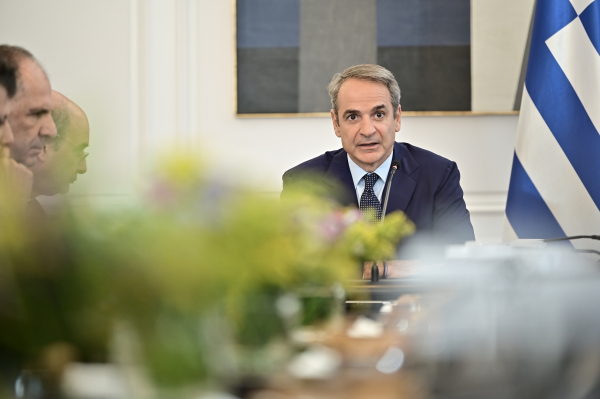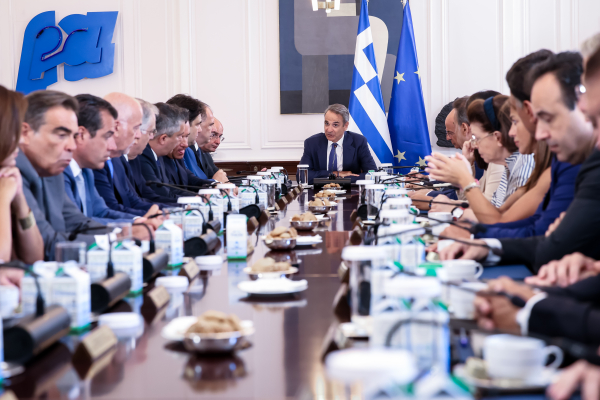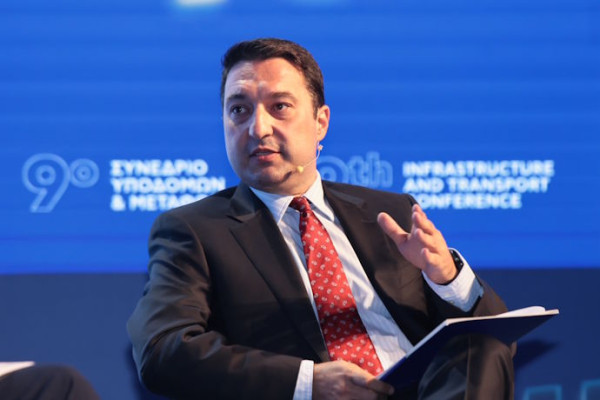

According to officials, Mitsotakis briefed the Cypriot leader on the objectives of the visit and the broader state of Greek-Turkish relations.
The two leaders also discussed renewed efforts to revive long-stalled negotiations aimed at reunifying Cyprus, which has remained divided along ethnic lines for decades. Greece and Cyprus, both members of the European Union, traditionally coordinate closely on matters relating to Turkey.
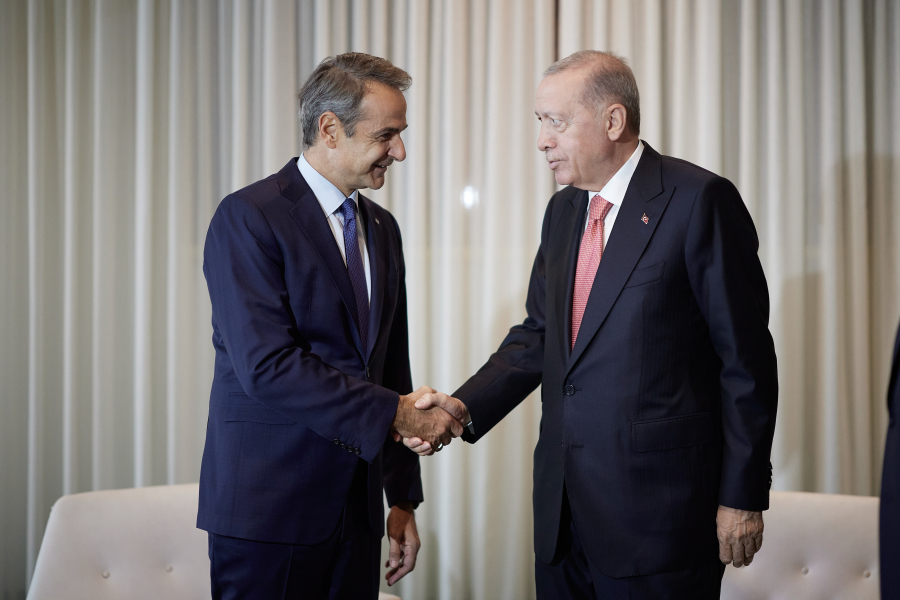
Mitsotakis’ visit to Turkey on Wednesday is expected to focus primarily on maintaining stability in the Aegean Sea and keeping diplomatic communication channels open between the two neighbors. The Greek government has emphasized that dialogue should continue on a bilateral basis, without third-party mediation. In a recent television interview, Mitsotakis said that Greece and Turkey do not require external arbitration, including from the United States, to address issues between them, adding that he believes Ankara shares this view.
At the same time, the prime minister tempered expectations for any major breakthroughs. He said that under current conditions, he does not anticipate substantive progress in talks with Turkey. Mitsotakis reiterated that the central dispute between the two countries concerns the delimitation of maritime zones — including exclusive economic zones and continental shelves — in the Aegean Sea and the Eastern Mediterranean. He noted that progress becomes more difficult when Turkey raises additional issues beyond this core disagreement.
Mitsotakis also addressed Greece’s relationship with the United States, describing Washington as a strategic partner and stressing that Athens intends to continue strengthening bilateral ties. He said, however, that there is no confirmed date for a possible visit to Greece by former U.S. President Donald Trump.
Turkish media coverage of the upcoming visit has largely framed it around two parallel narratives: the potential for economic cooperation and the persistent tension in the Aegean. Some outlets have highlighted the security backdrop, linking the meeting to ongoing NAVTEX announcements and military maneuvers in the region, and portraying the talks as a test of restraint between the two countries.
Other Turkish media have adopted a more institutional approach, situating the visit within the framework of the High-Level Cooperation Council and focusing on the procedural aspects of the talks, ministerial participation, and an overall assessment of bilateral relations expected in Ankara.
Economic prospects have featured prominently in coverage by several outlets, with particular emphasis on the stated goal of increasing bilateral trade to $10 billion. These reports point to the possibility of new agreements and practical steps being advanced through the cooperation agenda, presenting the visit as a potential milestone in a gradual process of normalization.
Across the Turkish press spectrum, the common theme is that Mitsotakis’ visit is being viewed as a high-level test of the durability of the recent thaw in Greek-Turkish relations, with economic cooperation seen as an area of potential convergence and the Aegean Sea remaining a persistent source of tension.