
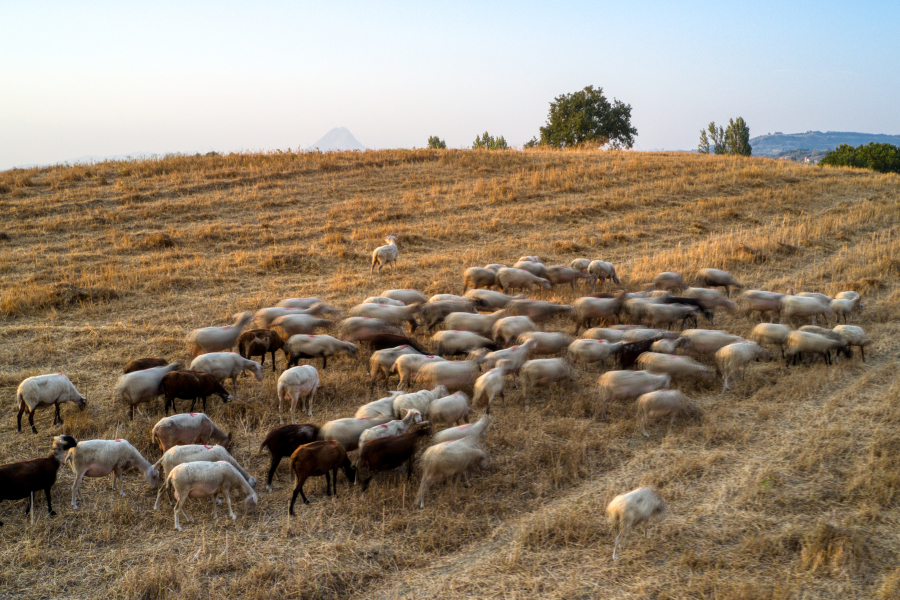

Greece warned that a potential lockdown triggered by animal-borne diseases could deal a severe blow to the country’s farming and livestock sectors, especially at the height of the corn harvest — a crop vital for animal feed and the agri-food economy. Officials cautioned that any disruption at this stage would send shockwaves through the entire supply chain.
Speaking to Real FM radio and Action 24 television on Tuesday, Agriculture and Food Minister Kostas Tsiaras drew a stark comparison between Greece’s recent battle with plague in 2024 and the current threat of sheep pox. The plague virus, he said, survives for about three weeks, which made it possible to impose limited, time-specific measures. Sheep pox, however, can linger for up to six months in carriers such as animal wool or feed, making containment far more complex.
The minister emphasized that the government has already stepped in with support for farmers, providing higher compensation for culled animals than any other European country and taking measures to offset feed costs. These interventions, he said, were intended to help livestock producers weather the crisis.
Authorities have also launched a ten-day emergency operation, following a meeting with regional governors, to mobilize veterinary services nationwide. The aim is to bolster biosecurity measures by creating new disinfection points and slowing the spread of the disease.
On vaccination, Tsiaras reiterated that there is no scientific basis to proceed. The vaccines currently available originate from outside the European Union, and clinical studies suggest immunity in only about 60 percent of animals. Moving ahead with such an uncertain measure, he warned, could endanger Greece’s agricultural exports — particularly feta cheese, the country’s most valuable livestock product.