
What began as a seemingly internal dispute over monastic leadership has now evolved into a complex crisis marked by foreign influence, intelligence links, and strategic maneuvering by church and state actors.
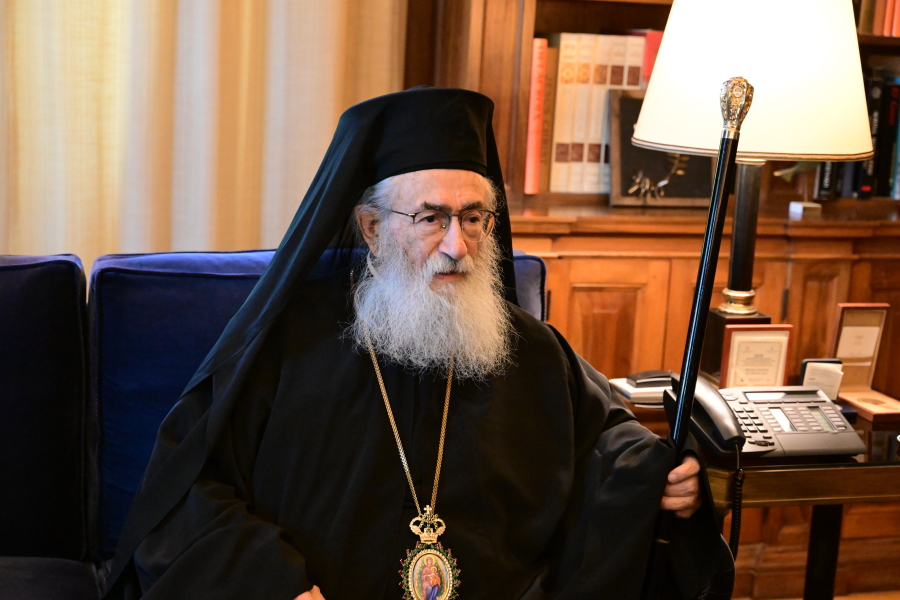
At the center of the controversy is Archbishop Damianos, abbot of the Monastery and a respected religious figure with deep ties to both Greek and Egyptian authorities. In recent days, a faction of monks within the Monastery has launched an organized attempt to remove him from his post—an effort described by insiders as a coup-like operation exploiting procedural loopholes and personal ambition.
The timing of this internal revolt has raised eyebrows in Athens, where officials are finalizing a bilateral agreement with Cairo to resolve long-standing legal issues surrounding the Monastery’s representation in Greece. Greek authorities believe the crisis is not coincidental. They are increasingly convinced that outside actors, including individuals linked to intelligence services and the Patriarchate of Jerusalem—an institution currently seen as heavily influenced by Moscow—are seeking to undermine the agreement and bring the Monastery under their own sphere of influence.
The latest confrontation began on July 25, when Archbishop Damianos traveled to Mount Sinai to inform the monks about an upcoming vote in the Greek Parliament that would grant legal recognition to the Monastery’s dependency in Athens. There, he was unexpectedly confronted by three monks who demanded his resignation. One of the monks is believed to be aspiring to succeed Damianos. The group claimed to have secured the backing of the Patriarchate of Jerusalem, a claim that has only heightened suspicions of foreign involvement.
Immediately following the confrontation, a general assembly was hastily convened. A key figure in that assembly was another monk—formerly Muslim and previously dismissed from his duties—who has also been linked to intelligence contacts. According to sources close to the Archbishop, the assembly violated Monastery regulations. Not all monks were informed or invited, and the communication was sent not through official channels, but from an unofficial email bearing the cryptic name “Tameio einai meion.” Complicating matters further, the vote to oust the Archbishop reportedly included the participation of a monk who had officially left the Monastery years earlier and now resides on Mount Athos.
Adding to the tension was the circulation of a written message among the monks. Its authors claimed direct contact with the Patriarch of Jerusalem and asserted that he fully supported their actions, even promising protection against any consequences. "He supports us completely and told us not to fear any threat," the message read.
In response, Archbishop Damianos has formally appealed to the Patriarchate, urging it to denounce what he called an illegitimate and destabilizing attempt to seize control of the Monastery. Should the Patriarch fail to respond, Damianos indicated he would exercise his authority as an autonomous abbot and take appropriate actions to safeguard the institution. In a public statement issued yesterday, the Archbishop condemned the effort to unseat him as irregular and divisive, accusing its organizers of dragging the Monastery into a “Babylonian captivity” and serving the interests of those who would prefer the Monastery’s crisis remain unresolved.
He also signaled his intent to initiate disciplinary procedures under church law against those monks involved, though he added that his goal is to give them a chance to recognize their actions and repent. Sources close to Damianos describe him as determined to restore order, even as he seeks to preserve spiritual unity among the brotherhood.
The Greek government has expressed growing frustration with the developments. Officials in Athens view the timing of the crisis as an overt attempt to sabotage progress on a sensitive and long-negotiated agreement with Egypt. According to sources with direct knowledge of the talks, the agreement is on track to be finalized during the August 6 visit of Egyptian Foreign Minister Badr Abdelatty, who is scheduled to meet with his Greek counterpart, Giorgos Gerapetritis. Any image of chaos or instability at the Monastery, officials warn, could serve as a pretext to delay or even abandon the deal.