
Greece is offering manufacturers another €95 million in energy assistance, but the package risks providing only temporary relief from an electricity-cost problem that has become a persistent drag on the country’s industrial competitiveness.
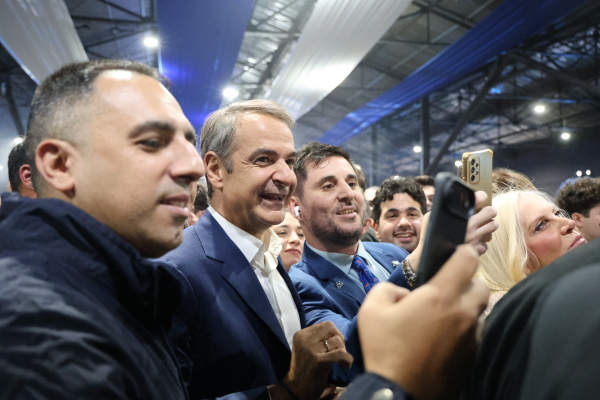
Prime Minister Kyriakos Mitsotakis announced the measures at the annual meeting of SEV, Greece’s main employers’ federation, on Tuesday saying the government would provide direct electricity subsidies to sectors including cement, food, paper and plastics.
Energy-intensive manufacturers will receive additional support. The intervention is expected to remove €95 million in costs from industrial production, with details due in the coming days.
ΔΙΑΒΑΣΤΕ ΕΠΙΣΗΣ

Yet the need for another subsidy package underscores a more difficult reality. Despite Greece’s rapid expansion of renewable power, manufacturers remain exposed to high electricity prices, with natural gas continuing to play an important role in determining wholesale prices.
In September alone, Greece’s average wholesale electricity price climbed to €156.31 a megawatt-hour, up €63.54 from a year earlier.
The government intends to use European Union state-aid mechanisms, including the Clean Industrial Deal State Aid Framework and the Middle East Crisis Temporary State Aid Framework. The programs allow governments to subsidize part of companies’ electricity consumption and costs.
Greece would join countries including Germany, Austria, Bulgaria, Slovenia and Ireland in deploying the European mechanisms.
But €95 million is modest when measured against the scale and duration of the energy challenge facing manufacturers. The package also comes on top of existing interventions, including an additional €75 million in compensation for indirect carbon costs, a 50% reduction in public-service charges and lower energy excise taxes.
The accumulation of support measures suggests that the underlying problem remains unresolved.