Greece’s government is scrambling to contain the political damage from a widening investigation into alleged misuse of agricultural funds, as new case files from European prosecutors deepen pressure on Prime Minister Kyriakos Mitsotakis and his ruling New Democracy party.
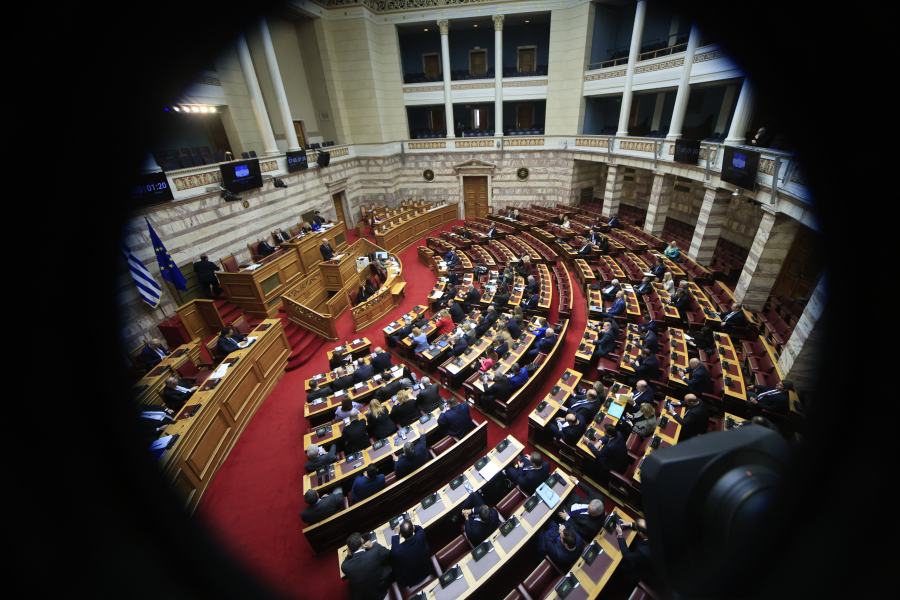
The probe, centered on the state payments agency OPEKEPE, has already ensnared 15 ruling-party figures, including 11 sitting lawmakers who insist they are innocent and have asked parliament to lift their immunity so they can defend themselves in court. A parliamentary ethics committee has backed that move, with a final vote expected in the coming weeks.
The latest developments have rattled the government, which is already seeing early signs of political wear in opinion polling. Officials in Athens are now trying to shift the conversation away from the allegations and toward institutional reform, in what critics describe as a familiar playbook aimed at buying time.
In recent days, Mitsotakis floated a proposal to bar lawmakers from simultaneously serving as ministers — a long-discussed reform that he now wants folded into a future constitutional revision. Government aides say the initiative reflects a broader push to modernize the state and curb entrenched patronage networks. Opponents, however, see it as an attempt to deflect attention from the scandal, which has been fueled by leaked conversations and mounting legal scrutiny.
Government spokesperson Pavlos Marinakis has sought to lower the political temperature, arguing that not all interactions between politicians and citizens should be construed as wrongdoing. He also reiterated the administration’s line that systemic issues, including clientelism, will be addressed through digital reforms and by shifting key responsibilities of OPEKEPE to the tax authority.
But the government’s messaging has been complicated by more combative voices within its ranks. Health Minister Adonis Georgiadis has openly dismissed the case files sent to parliament as “nonsense” and accused the European Public Prosecutor’s Office of engaging in political interference — an unusually sharp attack on an EU institution.
Georgiadis has also downplayed the scale of the alleged wrongdoing, arguing that the sums under investigation — reported to be around €800,000 out of €3.4 billion in distributed funds — do not amount to a “major” scandal. His remarks, including a suggestion that such a low level of irregularities could even be seen as a sign of effective management, have triggered backlash across the political spectrum.
Opposition parties have seized on the controversy, accusing the government of attempting to discredit judicial authorities and evade accountability. PASOK spokesperson Kostas Tsoukalas said Georgiadis was acting as a “proxy” for Mitsotakis, voicing arguments the prime minister prefers not to make publicly. SYRIZA described the minister’s comments as “institutionally dangerous,” while New Left said they reflected a government increasingly cornered by the unfolding scandal.
For Mitsotakis, the stakes are rising. While no formal charges have yet been brought against senior political figures, the steady drip of revelations — combined with the involvement of European prosecutors — is turning the OPEKEPE case into one of the most serious political challenges of his tenure.
Οι αργίες με κλειστά σχολεία για τους μαθητές μέσα στον Απρίλιο μετά το Πάσχα 2026