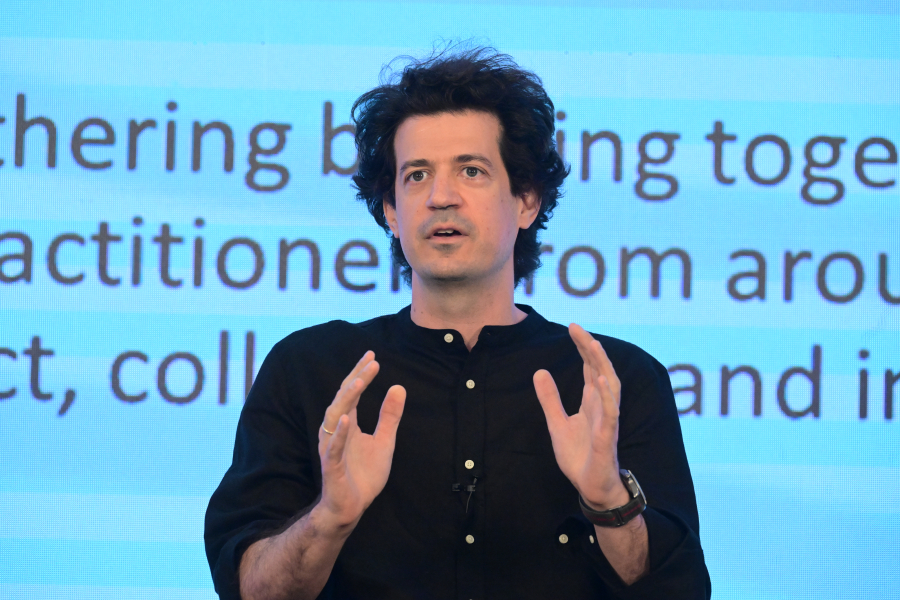
Artificial intelligence is poised to reshape the global workforce, but one of the world’s leading computer scientists believes its greatest risk may not be job displacement—it may be the gradual erosion of human creativity and critical thinking.
Konstantinos Daskalakis, Professor of Computer Science at the Massachusetts Institute of Technology (MIT), argues that AI has the potential to make people “less intelligent” if they become overly dependent on it for every act of creation. His warning comes at a time when generative AI systems are rapidly becoming embedded in workplaces, education, and everyday life.
Despite the widespread perception that artificial intelligence is a recent phenomenon, Daskalakis notes that AI has been influencing human behavior for decades. Recommendation algorithms on social media platforms and digital content services have long determined how information is ranked and consumed, often without users realizing it. The arrival of ChatGPT and similar systems merely made AI visible and accessible to the general public by allowing direct interaction with generative models.
That visibility, however, has encouraged many users to attribute human-like qualities to AI systems and place unwarranted trust in their outputs. According to Daskalakis, this is a mistake. While generative AI represents an exceptionally powerful engine for retrieving and synthesizing human knowledge, it remains inconsistent—capable of producing brilliant insights in one instance and spectacular failures in the next. Effective use therefore requires skepticism and continuous human oversight.
The technology is already transforming professional workflows. Software developers increasingly rely on AI assistants to generate code at unprecedented speed, while researchers, writers, and knowledge workers use these systems to search literature, analyze information, and draft text. These capabilities are expected to expand dramatically over the coming years.
Daskalakis predicts that AI will significantly boost productivity by enabling automated and hybrid decision-making systems in which humans and machines collaborate. As repetitive and routine tasks become increasingly automated, the distinction between decisions made by people and those made by algorithms will become less clear.
The economic consequences of this transition will not be evenly distributed. Organizations that successfully integrate AI into their operations while maintaining a strong understanding of human needs are likely to gain a competitive advantage. Likewise, professionals who combine technological fluency with creativity, empathy, and strategic thinking may find themselves particularly well positioned. By contrast, occupations centered on repetitive processes with little creative or interpersonal value could become increasingly vulnerable to automation.
For Daskalakis, the most valuable skills of the future will extend beyond technical expertise. Adaptability, critical reasoning, emotional intelligence, and originality may become defining competitive advantages precisely because they are difficult to replicate algorithmically. Human interaction itself could become more valuable as AI assumes a larger share of routine cognitive work.
This is why he believes society must rethink what makes people uniquely human. “Artificial intelligence can make us more foolish if we surrender to using it for everything we create,” he warns, suggesting that excessive reliance on AI risks weakening the very intellectual capacities that distinguish human beings.
He also stresses that equitable access to AI technologies will be essential to avoid creating a society divided between those who can leverage these powerful tools and those who cannot. Public policy and strategic investment, he argues, will play a decisive role in ensuring that AI benefits are broadly shared rather than concentrated among a small number of companies or countries.
Looking toward the next decade, Daskalakis sees enormous scientific promise. Rather than competing with technology giants on the scale of AI models, universities and research institutions should focus on fundamental discoveries that can drive the next generation of innovation. With sufficient investment and strategic direction, he believes artificial intelligence could accelerate breakthroughs in understanding the physical world, opening the door to advances that extend far beyond the technology sector itself.