
Greece is the European Union’s most exposed economy to energy imports from the Persian Gulf, leaving the country particularly vulnerable to any disruption in Middle Eastern oil flows at a time of heightened geopolitical tension in the region.
Roughly 25.4% of Greece’s fuel imports come from Gulf producers, more than four times the European Union average of 6.1%, according to an analysis by the Foundation for Economic and Industrial Research, or IOBE. No other EU member state comes close: Italy and Ireland rank next, at 9.5% and 9.1%, respectively.
The figures highlight the degree to which Greece—despite years of efforts across Europe to diversify energy supplies—remains unusually reliant on crude and refined products tied to one of the world’s most volatile energy corridors.
Between 2023 and 2025, Greece imported an average of €19 billion, equivalent to about $20.5 billion, in energy products annually, including crude oil, natural gas and refined petroleum, accounting for nearly a quarter of all goods imports. Energy exports, largely driven by refined products, totaled about €13 billion a year over the same period.
The country’s vulnerability is amplified by its dependence on Iraq, which supplies nearly 97% of Greece’s fuel imports from Gulf states. Because Iraqi crude exports move through the Strait of Hormuz, the narrow shipping lane at the mouth of the Gulf, Greece is more directly exposed than most European economies to any interruption in traffic through the waterway.
Saudi Arabia accounts for an additional 5.4% of Greek fuel imports, slightly above the EU average. But analysts treat Saudi supply as less vulnerable because the kingdom can redirect some exports through pipelines and terminals on the Red Sea, bypassing Hormuz.
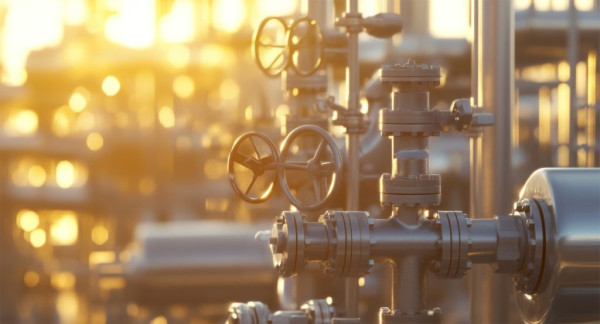
Greek officials and industry executives say the country is better positioned than the raw import figures suggest. Domestic refineries hold enough reserves to cover at least two months of demand and potentially as long as six months if inventories are replenished gradually, according to market estimates cited by IOBE.
Executives at major refining groups say they have already broadened their supplier networks and could replace Iraqi crude with shipments from Egypt, Libya and the North Sea if disruptions persist.
Outside energy, Greece’s exposure to the Gulf is modest. Imports of basic metals from the region represent 6.9% of the country’s total in that category, while coal and lignite account for 3.1%. Dependence in fertilizers is minimal, with Egypt serving as Greece’s principal supplier.
Still, the report underscores how Greece’s strategic position in southeastern Europe—and its role as a refining and fuel-export hub for the Balkans and eastern Mediterranean—leaves it more sensitive than most of its European peers to turbulence in Gulf energy markets.