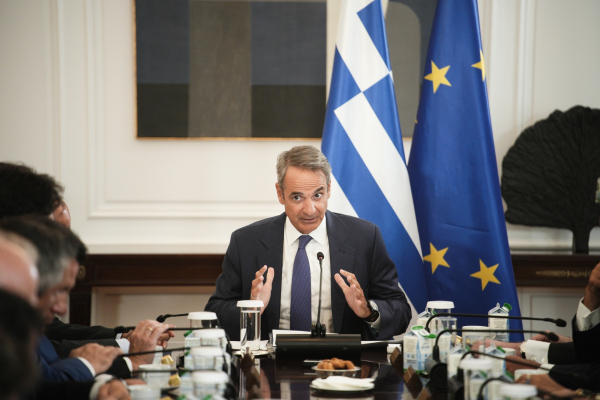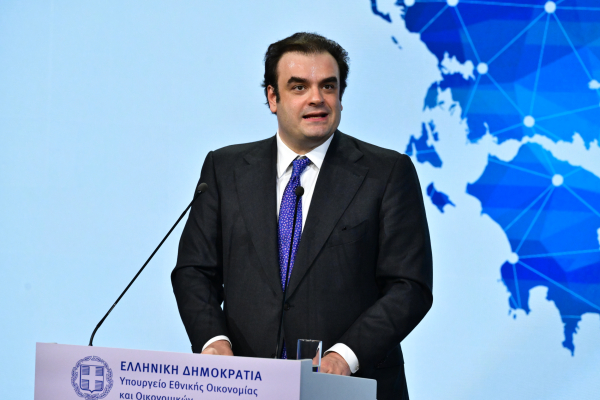

A series of escalating scandals is threatening to dominate Greek political life for months, leaving Prime Minister Kyriakos Mitsotakis and his government struggling to regain control of the national agenda.
Despite repeated attempts to shift public attention—including renewed proposals to ban social media use for children under 16—the government appears unable to escape the growing wave of controversy.
At the center of the turmoil is a mounting sense that Mitsotakis has become politically captive to events, as corruption allegations, judicial investigations, and parliamentary inquiries continue to pile up around his administration.
The immediate flashpoint will come on April 16, when the Greek Parliament is set to hold a high-level debate on the rule of law following a request by opposition leader Nikos Androulakis. Although the discussion was originally prompted by Greece’s wiretapping scandal—which revealed that politicians, journalists, and other public figures had been placed under surveillance—it is expected to broaden into a sweeping indictment of the government’s handling of multiple controversies.
Another major issue likely to dominate the debate is the OPEKEPE affair, a widening investigation into alleged fraud and misconduct involving Greece’s agricultural subsidy agency. The scandal has taken on new significance after the European Public Prosecutor’s Office submitted fresh case files to the Greek Parliament, implicating additional lawmakers and former government officials.
The following week, parliamentary committees are expected to review requests to lift the immunity of 13 members of parliament connected to the OPEKEPE investigation. The vote is shaping up to be a politically sensitive test for Mitsotakis, with some members of his own ruling New Democracy party reportedly threatening to rebel rather than follow the party line. Such a revolt would expose growing fractures within the governing majority and deepen tensions between the prime minister and his parliamentary bloc.
Further pressure is expected from investigations involving former ministers, including the likely formation of special parliamentary committees under Greece’s constitutional provisions governing ministerial responsibility.
At the same time, the opposition is preparing to demand a formal parliamentary inquiry into the wiretapping affair, ensuring that one of the most politically damaging scandals of Mitsotakis’s tenure remains at the forefront of public debate.
The legal and political pressure is unlikely to ease in the months ahead. Another major case file tied to the OPEKEPE investigation is expected in June and may implicate additional former ministers and lawmakers from both government and opposition parties. Reports suggest this will not be the final installment, raising the prospect of a prolonged cycle of investigations, immunity votes, and parliamentary hearings.
Beyond corruption allegations, the government also faces renewed scrutiny over the 2023 Tempi rail disaster—the deadliest train crash in Greek history—which killed 57 people and triggered nationwide protests over state negligence and infrastructure failures. Judicial authorities are expected in September to decide whether senior government figures, including former Transport Minister Kostas Karamanlis, should face trial before Greece’s Special Court over their handling of the tragedy.
Perhaps most concerning for the prime minister’s office is the possibility that ongoing judicial proceedings related to the wiretapping scandal could directly implicate Mitsotakis himself. According to reports, government officials fear that one of the accused may identify the prime minister in court as having ultimate responsibility for the surveillance operations. Were that to happen, prosecutors would be required to forward the case to Parliament, likely triggering opposition demands for a formal pre-trial investigation into the prime minister.
Taken together, the scandals now confronting the Greek government resemble a political domino effect, with each controversy generating new investigations and further fallout. The accumulation of pressure has fueled growing speculation in Athens that Mitsotakis may ultimately seek to call snap elections in the autumn in an attempt to regain political initiative before the crisis deepens further.
For now, however, the government appears trapped in an increasingly hostile political climate—unable to move beyond the scandals that continue to define its agenda.